
MSI Crosshair 18 Review: A Big-Screen QHD+ 240Hz Gaming Laptop Built for Smooth Competitive Play
If you’re comparing powerful 18-inch laptops in Canada, this MSI Crosshair 18 configuration targets a very specific sweet spot: a 2560×1600 (QHD+) 240Hz panel, Intel Core Ultra 9 275HX, and NVIDIA GeForce RTX 5070 8GB GDDR7—plus 32GB DDR5 and a 2TB PCIe SSD with a bonus docking set. This MSI Crosshair 18 review breaks down who it’s for, who should skip it, and how to judge value before you buy.
Quick Summary (Featured Snippet Style)
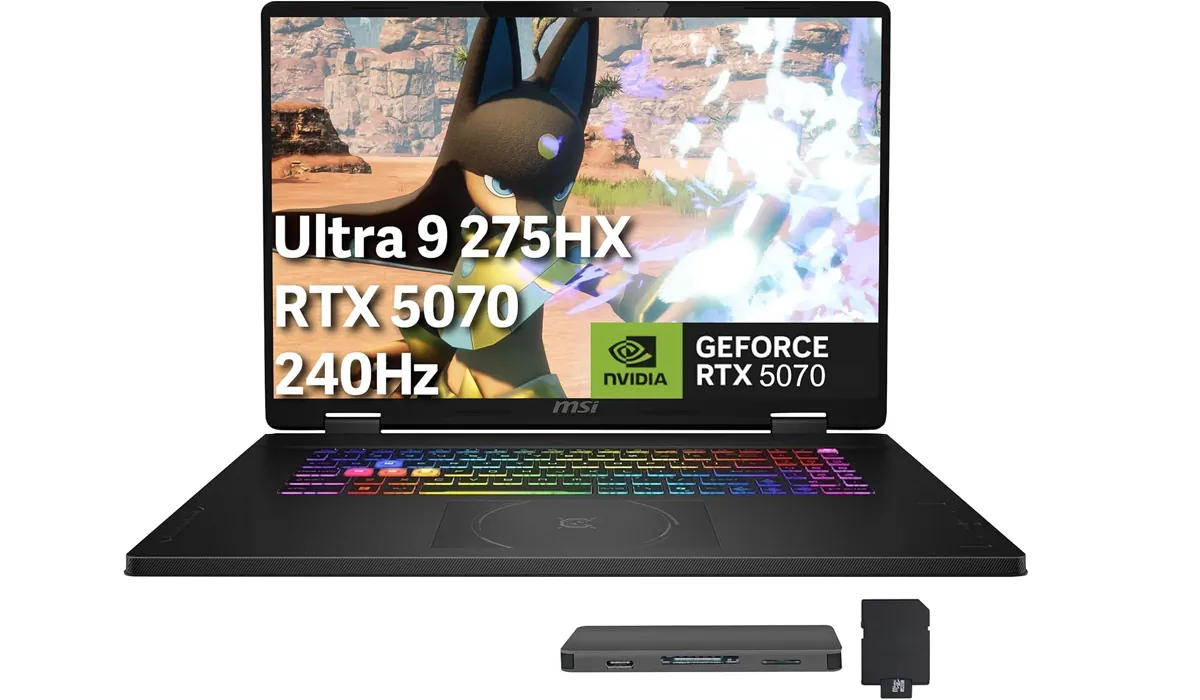
A high-refresh 18-inch gaming laptop built around an Intel Core Ultra 9 275HX and RTX 5070 8GB GDDR7, paired with a 2560×1600 240Hz panel and 32GB DDR5.
Competitive shooters, fast-paced esports, and desk-first gamers who want a big QHD+ screen with 240Hz smoothness—plus headroom for multitasking.
Buyers who prioritize ultra-light portability or long unplugged battery life. An 18-inch chassis is built to live on a desk most days.
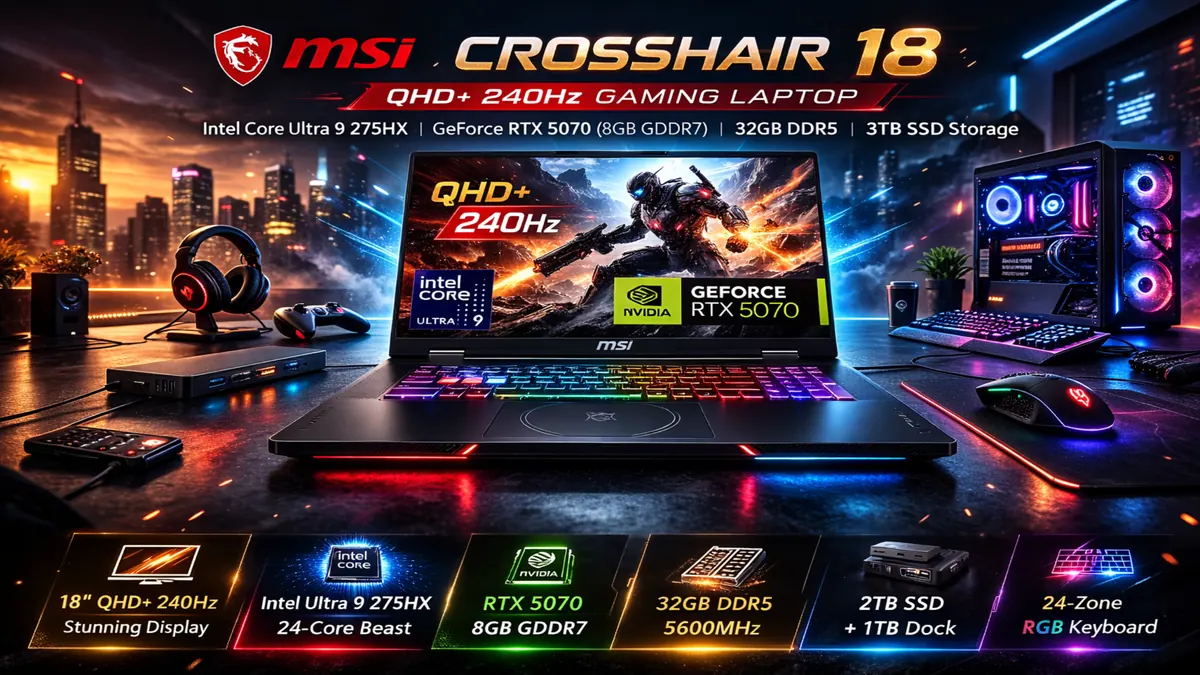
This configuration highlights an 18" QHD+ 240Hz display, Intel Core Ultra 9 275HX, RTX 5070 graphics, 32GB DDR5, and a 2TB SSD—plus a bonus dock/storage bundle (as listed on Amazon.ca).
MSI Crosshair 18 Key Specs (This Configuration)
| Display | 18-inch, 2560×1600 (QHD+), 240Hz |
|---|---|
| CPU | Intel Core Ultra 9 275HX |
| GPU | NVIDIA GeForce RTX 5070 (8GB GDDR7) |
| Memory | 32GB DDR5 (listing mentions 5600MHz) |
| Storage | 2TB PCIe SSD (bonus dock/storage bundle mentioned on the listing) |
| Keyboard | 24-zone RGB backlit keyboard + numeric keypad |
| Wireless | Wi-Fi 6E + Bluetooth |
| Ports | USB-C, 3× USB-A, HDMI, audio combo jack, RJ-45 Ethernet, Kensington lock (as listed) |
| Size / weight | Approx. 40.4 × 28.0 × 2.6 cm, ~3.1 kg (as listed) |
| OS | Windows 11 Home |
Simple note: 2560×1600 is a 16:10-style resolution (often described as WQXGA/QHD+ in laptop displays). That extra vertical space is great for work and browsing.
Two Quick Technical References (for clarity)
If you like verifying terms (Wikipedia-style), these are helpful:
• Resolution context: Display resolution standards (Wikipedia)
• GPU lineup context: GeForce RTX 50 series (Wikipedia)
Understanding Search Intent (So This Page Helps You Decide)
People searching “MSI Crosshair 18 review” usually have commercial intent (compare options), and many also have transactional intent (ready to buy if the fit is right). That’s why this page focuses on real-life fit: display experience, desk vs travel lifestyle, and the tradeoffs of an 18-inch chassis.
Display Experience: Why 18" QHD+ at 240Hz Is the Main Story
For competitive gaming, refresh rate matters for motion clarity—especially in fast shooters. QHD+ adds sharpness and detail, and the 16:10 shape gives you a little extra vertical room. If you play esports titles at high FPS, a 240Hz panel can feel noticeably smoother.
The extra vertical pixels make it easier to multitask—Discord, guides, OBS, and browser tabs feel less cramped.
Higher refresh can make tracking targets feel more “connected.” You’ll get the most benefit when your FPS is high enough.
Look for independent reviews on brightness, color coverage, and response time. Refresh rate is only one piece of a great display.
Performance Review: What This Hardware Is Built to Do
This configuration is designed for high-refresh gaming and heavy multitasking: Ultra 9 class CPU + RTX 5070 class GPU + 32GB RAM. In practical terms, it’s aimed at three common use cases:
- High-FPS competitive gaming (where the 240Hz panel can actually shine)
- AAA gaming at QHD+ (where settings + upscaling choices matter)
- Streaming + multitasking (Discord, browser, capture tools, plus the game)
I don’t publish invented FPS numbers. If you add benchmarks later, only use verified sources or your own measured results. That’s better for trust, rankings, and long-term affiliate growth.
Paste verified results here later (review site link / YouTube test / your own data). This keeps your review credible.
| Game / Test | Resolution | Preset | Average FPS | Source link |
|---|---|---|---|---|
| Example: Cyberpunk 2077 | 2560×1600 | High | — | Add verified link |
| Example: Valorant | 2560×1600 | Competitive | — | Add verified link |
Productivity & Creator Use: The Hidden Win of 18-inch 16:10
Even if you buy this for gaming, the big 18-inch 16:10 screen can feel like a portable workstation. For editing, studying, coding, and multitasking, the extra space reduces constant window-switching.
More vertical pixels means less scrolling and more room for tools.
32GB RAM helps when you run game + browser + chat + capture tools at once.
Big-screen laptops are excellent desk replacements when you need one machine for everything.
Cooling & Sustained Performance: What to Expect
High-performance gaming laptops can throttle if airflow is blocked. For best sustained performance:
- Use a firm desk surface or a simple laptop stand
- Keep rear/side vents unobstructed
- Clean vents periodically (dust buildup reduces cooling)
Ports, Docking, and the Bonus Bundle: A Practical Value Add
For desk-first users, ports and docking convenience matter. This configuration mentions USB-C, multiple USB-A ports, HDMI, and RJ-45 Ethernet. If you work from a monitor or wired internet, that port mix is genuinely useful.
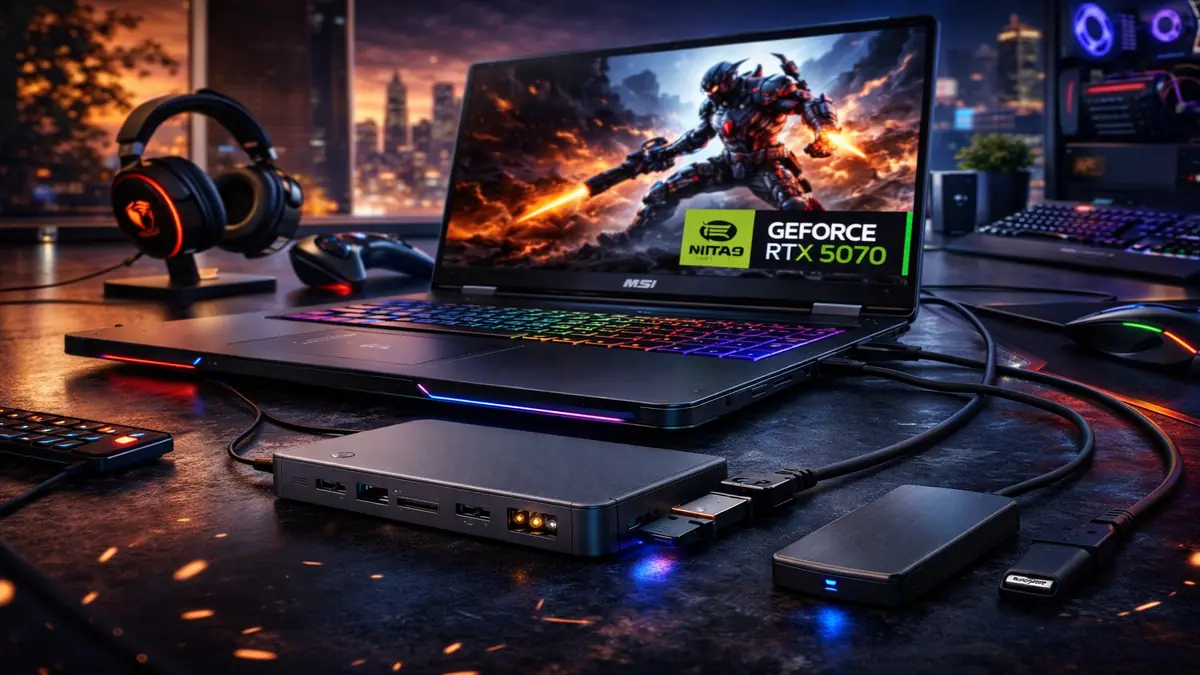
The listing also mentions a bonus docking/storage bundle. If you were going to buy a hub and extra storage anyway, this can reduce total setup cost.
Video: See the Laptop in Action
Here’s the product video you shared (embedded so it plays on this page):
Pros & Cons (Honest, Buyer-Focused)
- Large 18" QHD+ display is excellent for gaming and productivity
- 240Hz refresh is built for smooth competitive gameplay
- Strong multitasking headroom with 32GB RAM
- Good port selection (including Ethernet for stable online play)
- Bonus dock/storage bundle can reduce “hidden costs”
- 18-inch laptops are heavy and less travel-friendly
- Battery life is typically not the priority in high-power gaming builds
- QHD+ gaming can be demanding—settings/upscaling choices matter
- Value depends heavily on current Amazon.ca pricing and competing deals
Who Should Buy This MSI Crosshair 18?
- Esports / competitive players who want a high-refresh panel and a big screen
- Desk-first users who want a desktop-replacement feel
- Multitaskers who stream, browse, and game at the same time
- Canada buyers who prefer Amazon.ca shopping convenience
Who Should NOT Buy It?
- Frequent travelers who need a light laptop for daily carry
- Battery-first users who work unplugged for long hours
- Budget buyers who only play light esports titles and don’t need a premium big-screen setup
Comparison: How to Decide Versus Similar Gaming Laptops
Don’t compare by specs alone. Compare by the experience you want: screen size + refresh, portability, and whether you’ll actually use the included accessories.
| Option | Best for | Why you’d pick it | Why you might skip it |
|---|---|---|---|
| MSI Crosshair 18 (this page) | Big-screen QHD+ 240Hz gaming + multitasking | 18" 2560×1600 240Hz experience + strong modern hardware | Heavier desktop-replacement style |
| 16-inch performance laptops | Carry-friendly gaming | Often easier to travel with | Less screen immersion |
| 1080p/144Hz value laptops | Budget competitive gaming | Lower cost, easier to push high FPS | Less sharp image, weaker “big-screen” experience |
Final Verdict: Should You Buy the MSI Crosshair 18?
If you want a big, sharp QHD+ screen and a 240Hz experience for competitive play, this configuration makes sense—especially as a desk-first “desktop replacement.” The deciding factor is always value: check current pricing and compare with similar RTX 5070-class laptops before you commit.
Buy this model when the Amazon.ca price is competitive and you genuinely want the 18-inch 240Hz experience (plus the included accessories). If portability is your top priority, go smaller.
FAQ (Important for Ranking)
Is the MSI Crosshair 18 good for competitive esports?
Yes—if you play esports titles at high FPS, a 240Hz panel can feel smoother and more responsive. You’ll get the best results by tuning in-game settings for stable frame rates.
What resolution is “QHD+” on this model?
This configuration is listed as 2560×1600 (a common 16:10 QHD+ / WQXGA-style resolution).
Is 32GB RAM worth it for gaming?
For many games, 16GB can be enough—but 32GB is a real upgrade if you stream, multitask heavily, keep many browser tabs open, or use creator apps alongside gaming.
Does this configuration include a docking bundle?
The Amazon listing mentions a bonus docking/storage bundle. Always confirm the exact bundle contents on the product page before ordering, since listings can change over time.
Is this a good choice for Canada buyers?
It can be—especially if Amazon.ca has a strong deal and you want local shopping convenience. Always double-check seller details, warranty notes, and return terms during checkout.
About the Author
Want to Check Today’s Price?
Prices move fast for gaming laptops in Canada. If today’s Amazon.ca deal is strong, this can be a compelling big-screen 240Hz setup for desk-first buyers.


